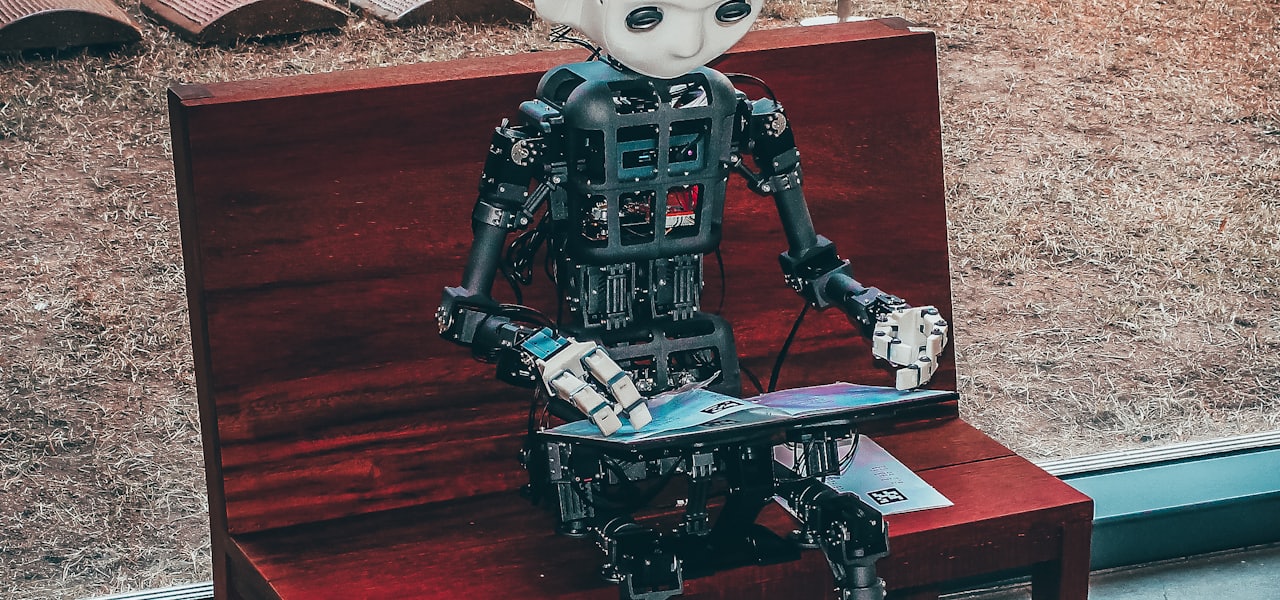
PainWorth is a justice, legal and insurance services application founded by Canadian entrepreneurs Mike Zouhri, Chris Trudel and Ryan Bencic. The application is a "robot lawyer" that uses artificial intelligence to automate personal injury claims for injury victims. It is currently available in Canada and the United States. PainWorth has been featured by several news outlets, including CTV, Global News, CBC, and has also been featured by the American Bar Association and LexisNexis for its role addressing social issues such as access to justice and other systemic issues in the legal and insurance industry. == Application == PainWorth began as a tool for calculating non-pecuniary damages for injury victims but has since expanded beyond a personal injury calculator to include features that help injury victims and business users with pecuniary damages, economic calculations, prescribed rates and providing informational guides to help navigate settlement negotiation, managing claims records and other issues encountered by self-represented litigants or claims managers. The platform makes use of automation to provide free user-guided calculations, steps and processes to successfully settle an injury claim. The application is supported by Microsoft Azure. == Personal Injury Calculator == PainWorth is the first service to use Artificial Intelligence to interpret case law in order to determine the value of pain and suffering incurred by specific injury types and injury severities. The cited case law is used as evidence and presented in statistical models to determine an accurate valuation compliant with the jurisdiction, regulatory rules and case complexities. == General Damages Calculator == PainWorth also offers a personal injury settlement calculator that assesses general damages based on specific case complexities and jurisdiction. The service takes into account medical complications and recovery in order to calculate the fair valuation. == Injury Settlement Platform == PainWorth insurance settlement platform facilitates a direct and automated way resolution center to settle cases for their assessed value without enduring the hardship of litigation. In 2021, Painworth won the title of World's Best Emerging Insurance Product for the development of this platform. == History == In 2019, Mike Zouhri was struck by a drunk driver which left him seriously injured and resulted in a lawsuit. Frustrated by the slow and expensive process, Zouhri went down to the law library and learned how to manage injury claims. After learning the process, he partnered lawyers and legal advisors to create an app to allow users to quickly settle their own injury claims fairly and accurately. Immediately after its launch, PainWorth quickly became widely used by thousands of users and gained significant media coverage. Global News reported that the bot had successfully helped people with more than $10 million in claims in only a few short months, all free of charge. In July 2020, PainWorth began raising concern over injustices and gender bias in the legal system. in Canadian courts.
Natural Language Toolkit
The Natural Language Toolkit, or more commonly NLTK, is a suite of libraries and programs for symbolic and statistical natural language processing (NLP) for English written in the Python programming language. It supports classification, tokenization, stemming, tagging, parsing, and semantic reasoning functionalities. It was developed by Steven Bird and Edward Loper in the Department of Computer and Information Science at the University of Pennsylvania. NLTK includes graphical demonstrations and sample data. It is accompanied by a book that explains the underlying concepts behind the language processing tasks supported by the toolkit, plus a cookbook. NLTK is intended to support research and teaching in NLP or closely related areas, including empirical linguistics, cognitive science, artificial intelligence, information retrieval, and machine learning. NLTK has been used successfully as a teaching tool, as an individual study tool, and as a platform for prototyping and building research systems. == Library highlights == Discourse representation Lexical analysis: Word and text tokenizer n-gram and collocations Part-of-speech tagger Tree model and Text chunker for capturing Named-entity recognition
Pharmacy automation
Pharmacy automation involves the mechanical processes of handling and distributing medications. Any pharmacy task may be involved, including counting small objects (e.g., tablets, capsules); measuring and mixing powders and liquids for compounding; tracking and updating customer information in databases (e.g., personally identifiable information (PII), medical history, drug interaction risk detection); and inventory management. This article focuses on the changes that have taken place in the local, or community pharmacy since the 1960s. == History == Dispensing medications in a community pharmacy before the 1970s was a time-consuming operation. The pharmacist dispensed prescriptions in tablet or capsule form with a simple tray and spatula. Many new medications were developed by pharmaceutical manufacturers at an ever-increasing pace, and medications prices were rising steeply. A typical community pharmacist was working longer hours and often forced to hire staff to handle increased workloads which resulted in less time to focus on safety issues. These additional factors led to use of a machine to count medications. The original electronic portable digital tablet counting technology was invented in Manchester, England between 1967 and 1970 by the brothers John and Frank Kirby. I had the original idea of how the machine would work and it was my patent, but it was a joint effort getting it to work in a saleable form. It was 3 years of very hard work. I had originally studied heavy electrical engineering before changing over to Medical School and qualifying as a Medical Doctor in 1968. In fact I was Senior House (Casualty) Officer (A&E or ER) in 1970 at North Manchester General Hospital when I filed the patent. I must have been the only hospital doctor in Britain with an oscilloscope, a soldering iron and a drawing board in his room in the Doctors' Residence. The housekeepers were bemused by all the wires. Frank originally trained as a Banker but quit to take a job with a local electronics firm during the development. He died in 1987, a terrible loss. [Extract from personal communication received in March 2010 from John Kirby.] Frank and John Kirby and their associate Rodney Lester were pioneers in pharmacy automation and small-object counting technology. In 1967, the Kirbys invented a portable digital tablet counter to count tablets and capsules. With Lester they formed a limited company. In 1970, their invention was patented and put into production in Oldham, England. The tablet counter aided the pharmacy industry with time-consuming manual counting of drug prescriptions. A counting machine consistently counted medications accurately and quickly. This aspect of pharmacy automation was quickly adopted, and innovations emerged every decade to aid the pharmacy industry to deliver medications quickly, safely, and economically. Modern pharmacies have many new options to improve their workflow by using the new technology, and can choose intelligently from the many options available. === Chronology === On 1 January 1971 commercial production of the first portable digital tablet counters in the World began. John Kirby had filed U.K. Patent number GB1358378(A) on 8 September 1970 and U.S. patent number 3789194 on 9 August 1971. These early electronic counters were designed to help pharmacies replace the common (but often inaccurate) practice of counting medications by hand. In 1975, the digital technology was exported to America. In early 1980 a dedicated research, development and production facility was built in Oldham, England at a cost of £500,000. Between 1982 and 1983, two separate development facilities had been created. In America, overseen by Rodney Lester; and in England, overseen by the Kirby brothers. In 1987, Frank Kirby died. In 1989, John Kirby moved his UK facility to Devon, England. A simple to operate machine had been developed to accurately and quickly count prescription medications. Technology improvements soon resulted in a more compact model. The price of such equipment in 1980 was around £1,300. This substantial investment in new technology was a major financial consideration, but the pharmacy community considered the use of a counting machine as a superior method compared to hand-counting medications. These early devices became known as tablet counter, capsule counter, pill counter, or drug counter. The new counting technology replaced manual methods in many industries such as, vitamin and diet supplement manufacturing. Technicians needed a small, affordable device to count and bottle medications. In England and America, the 1980s and 1990s saw new the development of high-speed machines for counting and bottle filling, Like their pharmacy-based counterparts, these industrial units were designed to be fast and simple to operate, yet remain small and cost effective. In America, in the late 1990s/early 2000s a new type of tablet counter appeared. It was simple to use, compact, inexpensive, and had good counting accuracy. At the turn of the millennium technical advances allowed the design of counters with a software verification system. With an onboard computer, displaying photo images of medications to assist the pharmacist or pharmacy technician to verify that the correct medication was being dispensed. In addition, a database for storing all prescriptions that were counted on the device. Between September 2005 and May 2007, American Capital made a major financial investment in Kirby Lester, which then relocated to a larger facility to expand its research and development capabilities. This move added extra space for product research and development facility (R&D). It allowed the opportunity to develop new advanced technology products that met the pharmacy's needs for simple, accurate, and cost-effective ways to dispense prescriptions safely. Pictured here is an early American type of integrated counter and packaging device. This machine was a third generation step in the evolution of pharmacy automated devices. Later models held pre-counted containers of commonly-prescribed medications. == Global variations == In the EU member states legislation was introduced in 1998 which had a major effect on UK Pharmacy operations. It effectively prohibited the use of tablet counters for counting and dispensing bulk packaged tablets. Both usage and sales of the machines in the UK declined rapidly as a result of the introduction of blister packaging for medicines. == Current state of the industry == A tablet counter has become a standard in more than 30,000 sites in 35 countries (as of 2010) (including many non-pharmacy sites, such as manufacturing facilities that use a counting machine as a check for small items). During the 1990s through 2012, numerous new pharmacy automation products came to market. During this timeframe, counting technologies, robotics, workflow management software, and interactive voice recognition (IVR) systems for retail (both chain and independent), outpatient, government, and closed-door pharmacies (mail order and central fill) were all introduced. Additionally, the concept of scalability - of migrating from an entry-level product to the next level of automation (e.g., counting technology to robotics) - was introduced and subsequently launched a new product line in 1997. Pharmacists everywhere are making the switch to automation for its increased speed, greater accuracy, and better security. As the industry evolves and customer expectations grow, automation is becoming less of a luxury and more of a necessity. Especially for independent pharmacies, automation is now a means of keeping up with the competition of large chain pharmacies. == Technological changes and design improvements == Constant developments in technology make the dispensing of prescription medications safer, more accurate and more efficient. In America, in 2008, "next-generation" counting and verification systems were introduced. Based on the counting technology employed in preceding models, later machines included the ability to help the pharmacy operate more effectively. Equipped with a new computer interface to a pharmacy management system, with workflow and inventory software. It also included "checks and balances" to ensure the technician and pharmacist were dispensing the correct medication for each patient. This is something that is important to keep reported correctly when dealing with controlled substances like narcotics. This was a step forward to verify all 100% of prescriptions that were dispensed by pharmacy staff. In America, in 2009, further advanced counters were designed that included the ability to dispense hands-free – a feature that many operators had desired. This allowed pharmacies to automate their most commonly dispensed medications via calibrated cassettes. Thirty of a pharmacy's common medications would now be dispensed automatically. Another new model doubled that throughput via an enclosed robotic mechanism. Robo
NER model
NER is one of several formulas for accessing live subtitles in television broadcasts and events that are produced using speech recognition. The three letters stand for number, edit error and recognition error. It has been promoted as an alternative to Word error rate (Word Error Rate) which is a more objective measure. The overall score is calculated as follows: Firstly, the number of edit and recognition errors is deducted from the total number of words in the live subtitles. This number is then divided by the total number of words in the live subtitles and finally multiplied by one hundred. N E R v a l u e = N − E − R N ∗ 100 {\displaystyle NERvalue={\frac {N-E-R}{N}}100} . The acronyms stand for the following: N (number) = total number of words in the live subtitles E (Edit error) = edit error R (Recognition error) = recognition error This measurement process has been used for public television broadcasts in European countries like Italy and Switzerland. One major drawback with NER is that it requires a human assessor to rate errors as either: 1 Minor edition or recognition errors 2 Normal edition or recognition errors 3 Serious errors which are then weighted in the assessment process. This is both subjective, time consuming and costly. Also, NER fails to account for words left out subtitles which is something that does not take account of the D/deaf audience who want verbatim subtitles. As a result, NER cannot accurately reflect the audience's experience of subtitles. Another problem is the inconsistency of human evaluation of subtitles, particularly with live subtitles, where there are differing opinions of the importance of subtitle errors. By way of contrast, Word error rate is an objective measure of subtitle errors, since it measures the textual discrepancy between the subtitles and the speech.
Audio mining
Audio mining is a technique by which the content of an audio signal can be automatically analyzed and searched. It is most commonly used in the field of automatic speech recognition, where the analysis tries to identify any speech within the audio. The term audio mining is sometimes used interchangeably with audio indexing, phonetic searching, phonetic indexing, speech indexing, audio analytics, speech analytics, word spotting, and information retrieval. Audio indexing, however, is mostly used to describe the pre-process of audio mining, in which the audio file is broken down into a searchable index of words. == History == Academic research on audio mining began in the late 1970s in schools like Carnegie Mellon University, Columbia University, the Georgia Institute of Technology, and the University of Texas. Audio data indexing and retrieval began to receive attention and demand in the early 1990s, when multimedia content started to develop and the volume of audio content significantly increased. Before audio mining became the mainstream method, written transcripts of audio content were created and manually analyzed. == Process == Audio mining is typically split into four components: audio indexing, speech processing and recognition systems, feature extraction and audio classification. The audio will typically be processed by a speech recognition system in order to identify word or phoneme units that are likely to occur in the spoken content. This information may either be used immediately in pre-defined searches for keywords or phrases (a real-time "word spotting" system), or the output of the speech recognizer may be stored in an index file. One or more audio mining index files can then be loaded at a later date in order to run searches for keywords or phrases. The results of a search will normally be in terms of hits, which are regions within files that are good matches for the chosen keywords. The user may then be able to listen to the audio corresponding to these hits in order to verify if a correct match was found. === Audio Indexing === In audio, there is the main problem of information retrieval - there is a need to locate the text documents that contain the search key. Unlike humans, a computer is not able to distinguish between the different types of audios such as speed, mood, noise, music or human speech - an effective searching method is needed. Hence, audio indexing allows efficient search for information by analyzing an entire file using speech recognition. An index of content is then produced, bearing words and their locations done through content-based audio retrieval, focusing on extracted audio features. It is done through mainly two methods: Large Vocabulary Continuous Speech Recognition (LVCSR) and Phonetic-based Indexing. ==== Large Vocabulary Continuous Speech Recognizers (LVCSR) ==== In text-based indexing or large vocabulary continuous speech recognition (LVCSR), the audio file is first broken down into recognizable phonemes. It is then run through a dictionary that can contain several hundred thousand entries and matched with words and phrases to produce a full text transcript. A user can then simply search a desired word term and the relevant portion of the audio content will be returned. If the text or word could not be found in the dictionary, the system will choose the next most similar entry it can find. The system uses a language understanding model to create a confidence level for its matches. If the confidence level be below 100 percent, the system will provide options of all the found matches. ===== Advantages and disadvantages ===== The main draw of LVCSR is its high accuracy and high searching speed. In LVCSR, statistical methods are used to predict the likelihood of different word sequences, hence the accuracy is much higher than the single word lookup of a phonetic search. If the word can be found, the probability of the word spoken is very high. Meanwhile, while initial processing of audio takes a fair bit of time, searching is quick as just a simple test to text matching is needed. On the other hand, LVCSR is susceptible to common issues of speech recognition. The inherent random nature of audio and problems of external noise all affect the accuracies of text-based indexing. Another problem with LVCSR is its over reliance on its dictionary database. LVCSR only recognizes words that are found in their dictionary databases, and these dictionaries and databases are unable to keep up with the constant evolving of new terminology, names and words. Should the dictionary not contain a word, there is no way for the system to identify or predict it. This reduces the accuracy and reliability of the system. This is named the Out-of-vocabulary (OOV) problem. Audio mining systems try to cope with OOV by continuously updating the dictionary and language model used, but the problem still remains significant and has probed a search for alternatives. Additionally, due to the need to constantly update and maintain task-based knowledge and large training databases to cope with the OOV problem, high computational costs are incurred. This makes LVCSR an expensive approach to audio mining. ==== Phonetic-based Indexing ==== Phonetic-based indexing also breaks the audio file into recognizable phonemes, but instead of converting them to a text index, they are kept as they are and analyzed to create a phonetic-based index. The process of phonetic-based indexing can be split into two phases. The first phase is indexing. It begins by converting the input media into a standard audio representation format (PCM). Then, an acoustic model is applied to the speech. This acoustic model represents characteristics of both an acoustic channel (an environment in which the speech was uttered and a transducer through which it was recorded) and a natural language (in which human beings expressed the input speech). This produces a corresponding phonetic search track, or phonetic audio track (PAT), a highly compressed representation of the phonetic content of the input media. The second phase is searching. The user's search query term is parsed into a possible phoneme string using a phonetic dictionary. Then, multiple PAT files can be scanned at high speed during a single search for likely phonetic sequences that closely match corresponding strings of phonemes in the query term. ===== Advantages and disadvantages ===== Phonetic indexing is most attractive as it is largely unaffected by linguistic issues such as unrecognized words and spelling errors. Phonetic preprocessing maintains an open vocabulary that does not require updating. That makes it particularly useful for searching specialized terminology or words in foreign languages that do not commonly appear in dictionaries. It is also more effective for searching audio files with disruptive background noise and/or unclear utterances as it can compile results based on the sounds it can discern, and should the user wish to, they can search through the options until they find the desired item. Furthermore, in contrast to LVCSR, it can process audio files very quickly as there are very few unique phonemes between languages. However, phonemes cannot be effectively indexed like an entire word, thus searching on a phonetic-based system is slow. An issue with phonetic indexing is its low accuracy. Phoneme-based searches result in more false matches than text-based indexing. This is especially prevalent for short search terms, which have a stronger likelihood of sounding similar to other words or being part of bigger words. It could also return irrelevant results from other languages. Unless the system recognizes exactly the entire word, or understands phonetic sequences of languages, it is difficult for phonetic-based indexing to return accurate findings. === Speech processing and recognition system === Deemed as the most critical and complex component of audio mining, speech recognition requires the knowledge of human speech production system and its modeling. To correspond the Human speech production system, the electrical speech production system is developed to consist of: Speech generation Speech perception Voiced & unvoiced speech Model of human speech The electrical speech production system converts acoustic signal into corresponding representation of the spoken through the acoustic models in their software where all phonemes are represented. A statistical language model aids in the process by identifying how likely words are to follow each other in certain languages. Put together with a complex probability analysis, the speech recognition system is capable of taking an unknown speech signal and transcribing it into words based on the program's dictionary. ASR (automatic speech recognition) system includes: Acoustic analysis: input sound waveform is transformed into a feature Acoustic model: establishes relationship between speech signal and phonemes, pronunciation model and lang
Learning curve (machine learning)
In machine learning (ML), a learning curve (or training curve) is a graphical representation that shows how a model's performance on a training set (and usually a validation set) changes with the number of training iterations (epochs) or the amount of training data. Typically, the number of training epochs or training set size is plotted on the x-axis, and the value of the loss function (and possibly some other metric such as the cross-validation score) on the y-axis. Synonyms include error curve, experience curve, improvement curve and generalization curve. More abstractly, learning curves plot the difference between learning effort and predictive performance, where "learning effort" usually means the number of training samples, and "predictive performance" means accuracy on testing samples. Learning curves have many useful purposes in ML, including: choosing model parameters during design, adjusting optimization to improve convergence, and diagnosing problems such as overfitting (or underfitting). Learning curves can also be tools for determining how much a model benefits from adding more training data, and whether the model suffers more from a variance error or a bias error. If both the validation score and the training score converge to a certain value, then the model will no longer significantly benefit from more training data. == Formal definition == When creating a function to approximate the distribution of some data, it is necessary to define a loss function L ( f θ ( X ) , Y ) {\displaystyle L(f_{\theta }(X),Y)} to measure how good the model output is (e.g., accuracy for classification tasks or mean squared error for regression). We then define an optimization process which finds model parameters θ {\displaystyle \theta } such that L ( f θ ( X ) , Y ) {\displaystyle L(f_{\theta }(X),Y)} is minimized, referred to as θ ∗ {\displaystyle \theta ^{}} . === Training curve for amount of data === If the training data is { x 1 , x 2 , … , x n } , { y 1 , y 2 , … y n } {\displaystyle \{x_{1},x_{2},\dots ,x_{n}\},\{y_{1},y_{2},\dots y_{n}\}} and the validation data is { x 1 ′ , x 2 ′ , … x m ′ } , { y 1 ′ , y 2 ′ , … y m ′ } {\displaystyle \{x_{1}',x_{2}',\dots x_{m}'\},\{y_{1}',y_{2}',\dots y_{m}'\}} , a learning curve is the plot of the two curves i ↦ L ( f θ ∗ ( X i , Y i ) ( X i ) , Y i ) {\displaystyle i\mapsto L(f_{\theta ^{}(X_{i},Y_{i})}(X_{i}),Y_{i})} i ↦ L ( f θ ∗ ( X i , Y i ) ( X i ′ ) , Y i ′ ) {\displaystyle i\mapsto L(f_{\theta ^{}(X_{i},Y_{i})}(X_{i}'),Y_{i}')} where X i = { x 1 , x 2 , … x i } {\displaystyle X_{i}=\{x_{1},x_{2},\dots x_{i}\}} === Training curve for number of iterations === Many optimization algorithms are iterative, repeating the same step (such as backpropagation) until the process converges to an optimal value. Gradient descent is one such algorithm. If θ i ∗ {\displaystyle \theta _{i}^{}} is the approximation of the optimal θ {\displaystyle \theta } after i {\displaystyle i} steps, a learning curve is the plot of i ↦ L ( f θ i ∗ ( X , Y ) ( X ) , Y ) {\displaystyle i\mapsto L(f_{\theta _{i}^{}(X,Y)}(X),Y)} i ↦ L ( f θ i ∗ ( X , Y ) ( X ′ ) , Y ′ ) {\displaystyle i\mapsto L(f_{\theta _{i}^{}(X,Y)}(X'),Y')}
Graphics software
In computer graphics, graphics software refers to a program or collection of programs that enable a person to manipulate images or models visually on a computer. Computer graphics can be classified into two distinct categories: raster graphics and vector graphics, with further 2D and 3D variants. Many graphics programs focus exclusively on either vector or raster graphics, but there are a few that operate on both. It is simple to convert from vector graphics to raster graphics, but going the other way is harder. Some software attempts to do this. In addition to static graphics, there are animation and video editing software. Different types of software are often designed to edit different types of graphics such as video, photos, and vector-based drawings. The exact sources of graphics may vary for different tasks, but most can read and write files. Most graphics programs have the ability to import and export one or more graphics file formats, including those formats written for a particular computer graphics program. Such programs include, but are not limited to: GIMP, Adobe Photoshop, CorelDRAW, Microsoft Publisher, Picasa, etc. The use of a swatch is a palette of active colours that are selected and rearranged by the preference of the user. A swatch may be used in a program or be part of the universal palette on an operating system. It is used to change the colour of a text or image and in video editing. Vector graphics animation can be described as a series of mathematical transformations that are applied in sequence to one or more shapes in a scene. Raster graphics animation works in a similar fashion to film-based animation, where a series of still images produces the illusion of continuous movement. == History == SuperPaint was one of the earliest graphics software applications, first conceptualized in 1972 and achieving its first stable image in 1973 Fauve Matisse (later Macromedia xRes) was a pioneering program of the early 1990s, notably introducing layers in customer software. Currently Adobe Photoshop is one of the most used and best-known graphics programs in the Americas, having created more custom hardware solutions in the early 1990s, but was initially subject to various litigation. GIMP is a popular open-source alternative to Adobe Photoshop.